Ultra Processed Foods
The Lancet has published a major series of studies into the effects of UPFs on human health. Given the gastrointestinal similarity between humans and dogs, why are we giving our dogs UPFs?

We have known for some time that UPFs are bad for our health[1]. The Lancet has now published a major series of 104 studies examining the effects of ultra-processed foods (UPFs) on human health. Taken together, these studies link UPFs to twelve serious conditions including obesity, diabetes, cardiovascular disease, neurodegenerative disease, depression and early morbidity. According to the authors, UPFs are associated with elevated risks across thirty-two different diseases. They now call for UPFs to be banned in public institutions such as schools and hospitals, for limits on supermarket shelf space, and for clear front-of-pack labelling to identify UPFs[2].
What is clear from these papers is that UPF research is about biological mechanisms. Mechanisms that are shared among mammals and therefore also relevant to canine health: the impact of emulsifiers on the mucus layer, the formation of processing contaminants, exposure to AGEs formed by high-heat cooking and the oxidative burden of degraded fats. The Lancet describes consequences such as barrier stress, low-grade chronic inflammation, dysbiosis, endocrine disruption and the accumulation of processing-related toxicants.
So, the question follows: why are we giving our dogs UPFs?
The main thesis and the evidence
“The first hypothesis – that this [dietary] pattern [based on UPFs] is globally displacing long-established diets centred on whole foods and their culinary preparation as dishes and meals – is supported by decades of national food intake and purchase surveys, and recent global sales data. The second – that this pattern results in deterioration of diet quality, especially in relation to chronic disease prevention – is confirmed by national food intake surveys, large cohorts, and interventional studies showing gross nutrient imbalances; overeating driven by high energy density, hyper-palatability, soft texture, and disrupted food matrices; reduced intake of health-protective phytochemicals; and increased intake of toxic compounds, endocrine disruptors, and potentially harmful classes and mixtures of food additives. The third and final hypothesis – that this pattern increases the risk of multiple diet-related chronic diseases through various mechanisms – is substantiated by more than 100 prospective studies, meta-analyses, randomised controlled trials, and mechanistic studies, covering adverse outcomes across nearly all organ systems.”[3]
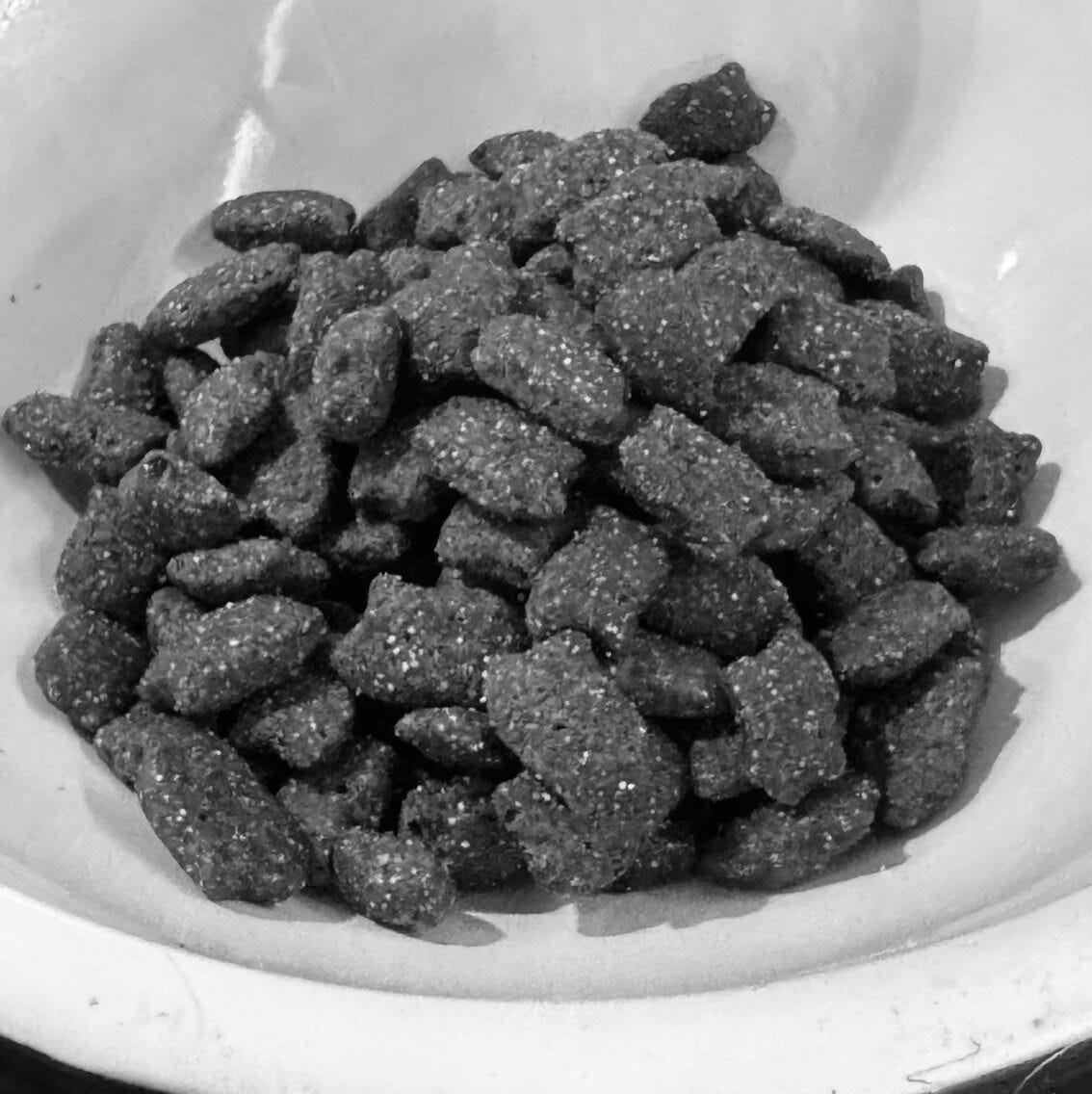
UPFs are aggressively marketed and engineered to be hyperpalatable, driving repeated consumption and often displacing traditional, nutrient-rich foods[4]. Under the Nova classification system[5], UPFs are branded, commercial formulations made from cheap ingredients (e.g. refined fats and sugars, protein isolates) and combined with food additives (e.g. dyes, artificial sweeteners, emulsifiers) to make the final product look, feel, sound, smell, and taste good.[6] UPFs include not only obvious “junk foods” but also products marketed as healthy, such as light, vegan, organic, or gluten-free formulations, when they are made from refined fractions and additives rather than intact whole foods[7].
This framing matters: humans and dogs share a striking degree of gastrointestinal similarity. Around 60%[8] of the taxonomic and functional landscape of the gut microbiome overlaps between the two species. Dogs are increasingly used as models for studying human gut physiology and gut homeostasis[9]; canine and human IBD share molecular features[10]; and the immunological handling of dietary AGEs appears broadly consistent across mammalian systems[11].
The response of pathways to processing is exactly the biological terrain UPF research sits on. So, if such a large percentage of the microbiome’s taxonomic and functional landscape is shared, and diet pushes dog and human microbiota in similar directions, then UPFs are not just a concern for humans, but also for our dogs.
And while canine studies into long-term morbidity lag behind the emerging human research into UPF, they do show mechanistic responses to processing that fall within the same biological pathways. Dogs and humans share tight-junction proteins, mucus-layer architecture, microbiome fermentation pathways and production of SCFAs, inflammatory responses to oxidised fats, and the receptor systems involved in recognising Maillard reaction products (MRPs/AGEs).
Canine studies confirm several of these effects directly:
high AGE exposure from extruded diets;
increased oxidative-stress markers with oxidised fats;
reversible microbiome and SCFA shifts between extruded and fresh diets;
inflammatory and metabolic marker differences across diet formats;
comparison[12] of raw, lightly processed, and extruded diets found clear differences in microbiota profiles and fermentation end-products;
moving dogs off dry extruded food altered microbiota diversity and metabolite patterns, changes which reversed when the dogs were returned to dry food[13].
One of the authors of the Lancet study, Professor Carlos Monteiro (University of Sao Paulo, Brazil) says, “The growing consumption of ultra-processed foods is reshaping diets worldwide, displacing fresh and minimally processed foods and meals. This change in what people eat is fuelled by powerful global corporations who generate huge profits by prioritising ultra-processed products, supported by extensive marketing and political lobbying to stop effective public health policies to support healthy eating.”
So why are we still giving our dogs UPFs?
If you’re interested in canine nutrition and wellness, why not follow me here on Substack, or pop over to DoggyDelly for more recipe ideas and nutritional information.
This post was originally published (with all references) at DoggyDelly.com.
Direct link: https://www.doggydelly.com/ultra-processed-foods/